


In the first six months of the current financial year, the country's exports grew by 25% to over ڈالر 15 billion, according to Razzaq Dawood, a trade adviser to the Prime Minister of Pakistan, in a message on social networking site Twitter. The year was ارب 12 billion.
On the one hand, the increase in the country's exports is being hailed as a welcome development in the field of foreign trade, but on the other hand, the country's trade deficit has increased by 100% in the first six months of the current financial year. Billion dollars
The huge increase in the trade deficit is due to the increase in the country's imports by more than 60%, which has reached almost ً 40 billion in six months.
The 100 percent increase in Pakistan's trade deficit comes at a time when the country is facing immense difficulties due to the imbalance in external payments and has to rely on external sources to raise money. Pakistan has a program from the International Monetary Fund (IMF) which has already created a wave of inflation in the country due to its strict conditions.
Under these conditions, fears of further inflation are being raised due to the recent budget presented in the country's parliament.
Foreign trade experts welcome the increase in the country's exports, commenting on the government's success as a major achievement, saying that the widening trade deficit is actually the biggest problem facing government policies and the central government. Despite the steps taken by the bank, it continues to grow and create more difficulties for Pakistan
Why is the trade deficit rising?
The 100 percent increase in the trade deficit in the first six months of the current financial year is due to the fact that imports have more than doubled over exports. In these six months, if exports increased by 25%, then the increase in imports was 63%.


Iqbal Tabish, an expert in the field of international trade, said that the increase in imports was due to higher imports of petroleum, automobiles, and food items. He said that especially global high prices of petroleum products have increased the country's imports immensely.
He said that although exports have also increased, the increase in imports is huge which is a sign of a threat to the country's foreign trade sector.
Iqbal Tabish said that although the import of raw materials used in domestic exports has also increased the imports, it remains to be seen whether the dollars spent on the import of raw materials in the form of goods produced from these raw materials. Returning to the country or not?
Sana Tawfeeq, an economics and foreign trade expert at Arif Habib Limited, says imports of petroleum products have contributed to the widening trade deficit, but also imports of machinery.
Sana Tawfeeq said that the import of machinery is being called for an expansion in the manufacturing sector but the import of the food sector has also increased significantly due to the import of large quantities of wheat and sugar.
Sana said that Pakistan used to export these items to the world but now they are imported to meet the domestic demand and to keep the prices stable in the local market which results in the trade deficit. ۔ This creates an imbalance in the country's foreign trade sector and current account deficits.
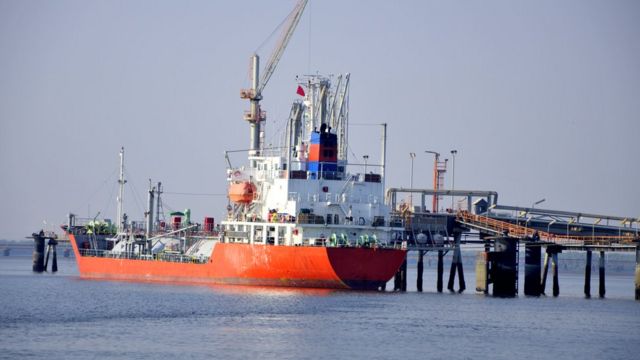
According to experts, imports of petroleum, automobiles, cellular phones, and foodstuffs have increased significantly.
According to Sana, the country's trade deficit has been steadily increasing in the last two years due to high imports and low exports.
Why are exports important?
On why exports are important for a country and what effect it has on the economy, Sana Tawfiq said that there are three ways for a country to attract capital from the outside world.
One of them is export, ie the products produced in the country should be sold in foreign markets and the capital should be brought into the country. The other two sources are foreign direct investment and remittances. Of these three sources, exports are the most important.
This is because when there is a surplus of domestically produced products and they can be exported abroad, on the one hand, there is capital from outside the country, which at that time was brought into the country in the form of global currency dollar. With this, the productive sector becomes more dynamic and with the increase in the pace of work, the growth rate of the national economy increases and employment opportunities are created for the people.
Sana said that when the increase in exports exceeds that of imports, then the balance of trade becomes surplus which is a good thing for the country.
Why isn't there a big increase in exports?
Pakistan's trade deficit is widening due to high imports and low exports. Explaining the reason for the absence of any major increase in exports, Sana said that there have been some fundamental problems with the export sector in the country due to which the sector has not been able to perform at the pace at which it can compete with imports. I would have been more.
Similarly, gas and electricity prices also increased the cost of the sector and reduced its competitiveness in the international market.
Governance issues also did not allow them to grow much. For example, at first there was a problem of financing facility for them that the banks did not give them money, but then the government launched 'Temporary Economic Refinancing Facility' after which the sector got the facility.
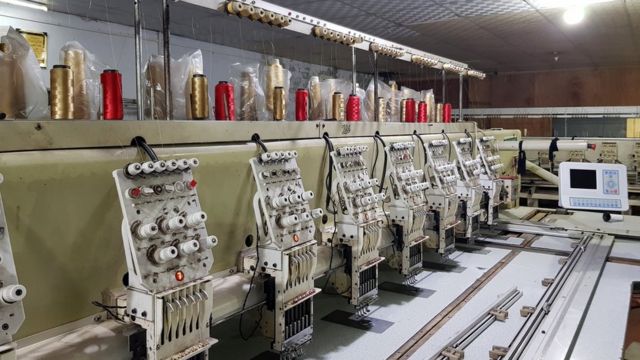 |
| Pakistan's trade deficit is widening due to high imports and low exports |
In December, imports began to decline, from ایک 1 billion in December of the current fiscal year compared to December of the previous fiscal year, said Razzaq Dawood, a trade adviser on imports.
He said that the increase of 25 percent would be known only when more exports of products of different sectors have increased due to an increase in their quantity or increase due to depreciation of the rupee. Has come to see
Talking about the increase in imports, Iqbal Tabish said that imports have increased significantly due to petroleum, automobiles, cellular phones, and food items.
He said the trade deficit in six months was 25 25 billion and if calculated, it could be 48 48-50 billion by the end of the year. However, if imports continue to decline, the trade deficit could reach 40 40 billion, which is very alarming for Pakistan's foreign trade sector.
What will be the negative effects of the growing trade deficit?
Pakistan's growing trade deficit has put a lot of pressure on the country's current account, which has reached سات 7 billion in the first five months of the current financial year.
The current account combines exports, remittances, and foreign investment dollars to see where the total dollars earned from them are compared to the dollars that go abroad in terms of imports and debt repayments. ۔
If fewer dollars are coming and more are going, then it means that the current account of the country is in deficit.
This year, Pakistan needs 23 23 billion in external payments, for which Pakistan has agreed to strict terms for the release of a ارب 1 billion tranche from the IMF, which has since been released by other international financial institutions such as Loans from the World Bank and the Asian Development Bank will begin.
Iqbal Tabish said that the current account deficit of the country needs to be controlled at present but due to the huge increase in imports this deficit is increasing.
The sharp rise in domestic imports is also putting pressure on the Pakistani rupee, which has risen from Rs 155 to Rs 178 in the first six months of this financial year against the US currency.



